For apartments, condos & townhome communities
Multifamily siding
in St. Louis.
Protect the building.
Plan the work with confidence.
Make sense of materials, budgets and the details behind the siding—with guidance built for owners, boards and property managers.
Backed by an installation partner with:
Start with your role
One exterior.
Different responsibilities.
The right plan starts with the decision you need to make. Find guidance for the property—and the people—you look after.
HOA & condo boards
Work through responsibility, reserves, approvals and a scope your board can explain to owners.
Plan for your community 02 / YOUR PROPERTYApartment owners
Connect building condition, capital planning and resident access before requesting replacement bids.
Plan for your property 03 / YOUR PROPERTYProperty managers
Organize multiple buildings, comparable proposals, resident notices and a documented handover.
Plan across your portfolioDealing with a leak or damaged siding? Start with repair and water-damage planning →
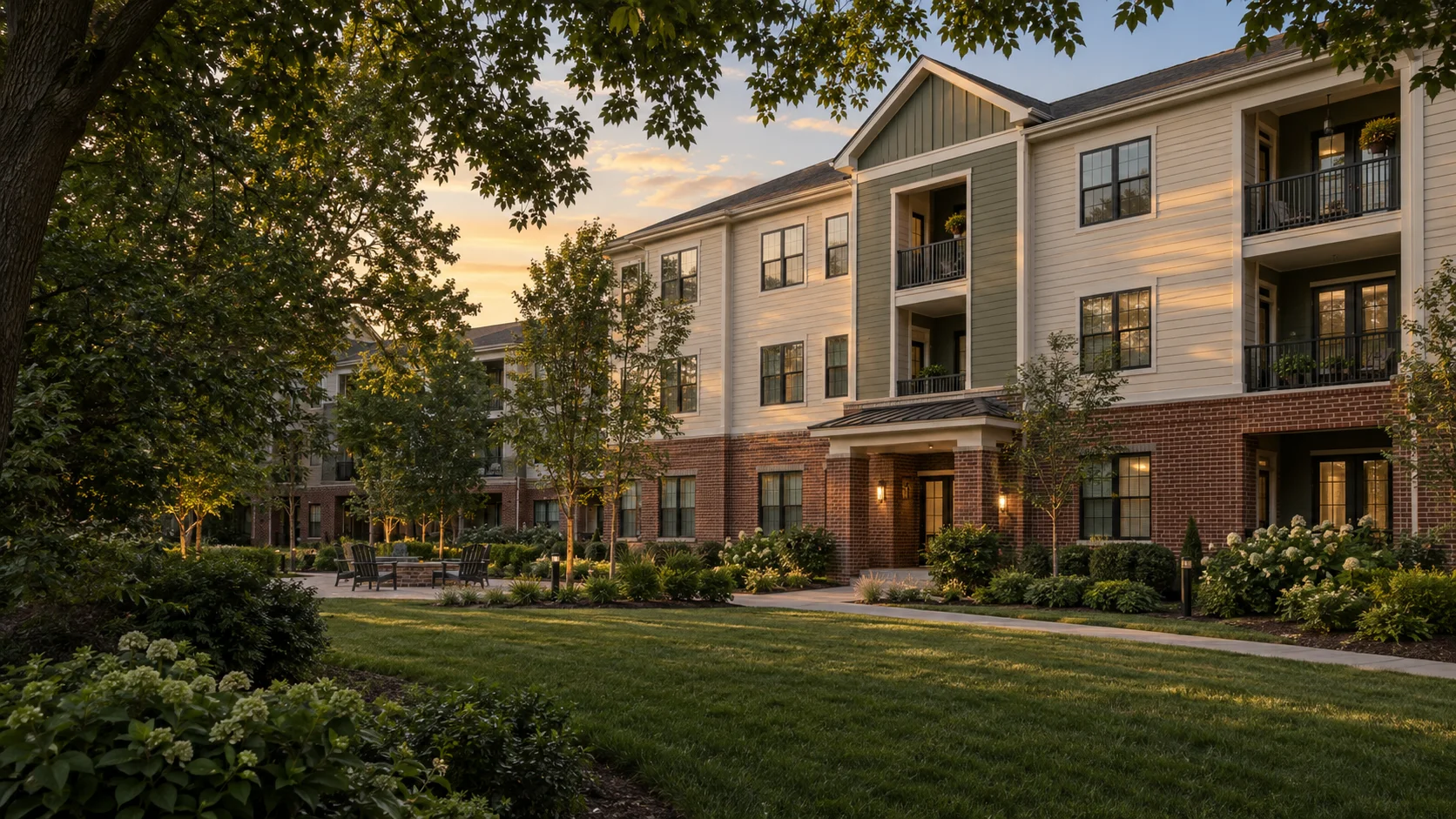
the finished exterior.
Water paths, transitions and sound backing belong in the plan.
Architectural concept for illustration.
Look beyond the surface
Better siding starts
with a better wall plan.
A new exterior is more than a color choice. Water can reach the wall at windows, roof edges, balconies and penetrations. Covering the surface without understanding those details can leave the original problem in place.
Start with a condition record for each building and elevation. Then define the investigation, the repair assumptions and the inspection points before bids go out.
- 01Record visible damage and recurring leaks.
- 02Clarify flashing, drainage and material transitions.
- 03Agree how concealed repairs will be priced and approved.
From the first question to the final walkthrough
Your St. Louis
siding field guide.
One connected planning resource for investigating conditions, comparing options, securing approvals and managing occupied-building work.
Read the complete guideA better way to compare
Know what’s included.
Know what’s still open.
Two siding bids can look similar and cover very different work. A lower price may omit access equipment, damaged sheathing, window flashing or daily resident protection.
Our comparison tool separates confirmed scope from unknowns. Use your own proposal amounts and adjustments to see where the numbers line up—and where a contractor still needs to answer.
Your bid comparison · illustrative example
A known exclusion can be priced. An unknown needs an answer. Keep them separate before you compare totals.
Open the interactive worksheet ↗Local details that change the plan
St. Louis is more
than one permit office.
Your building’s address, construction and ownership structure matter more than a general answer for “the metro.”
City, County or municipality?
Determine who reviews the exact property. In contracting municipalities, County building review and local zoning can be separate steps. Describe the proposed material, building use and any wall changes when asking about permits.
Check the approval pathway ↗Historic exterior restrictions
Check district and landmark status before settling on a replacement material or profile. A permit exemption does not settle whether the exterior alteration meets preservation requirements.
Plan for historic review ↗Association responsibility
A condo declaration determines key exterior responsibilities and cost allocations. Formation date and applicable Missouri provisions also matter. Read those documents before promising a particular vote or assessment method.
Work through board approvals ↗Start with the City building permit guidance, Cultural Resources Office and Missouri condominium law applicability. Confirm the requirements for your address and scope.
Practical answers, without the sales pitch
Prepare for the
decisions ahead.
Reserves, assessments
and project approvals.
Build the funding conversation around the declaration, an actual scope and the association’s available resources.
Explore funding decisions Project deliveryKeep residents
in the loop.
Plan access, entrances, notices and work zones before the first building opens up.
Plan occupied-building work Wall systemsResolve older
material questions.
Lead-paint rules and asbestos requirements are separate checks. Give each the right place in the scope.
Prepare for material assessmentBefore you start
Your first questions,
answered.
Start here, then follow the detailed guide for the decisions that apply to your property.
Build your project brief ↗How much does multifamily siding replacement cost in St. Louis?
A useful budget starts with measured wall area and a defined scope. Removal, access, trim, flashing, concealed damage and occupied-building logistics can change the total. Our cost guide explains the calculation without presenting made-up local averages.
Can a community replace siding in phases?
Phasing can help with cash flow and access, but the design must resolve temporary weather protection, color availability, repeated mobilization and unfinished transitions. Compare the full-project and phased scopes before deciding.
Does a St. Louis siding project need a permit?
Check the exact address, building use, cladding material and work scope. City, County and municipal requirements differ. Historic review can be a separate step, and a narrow replacement exemption should not be assumed to cover every apartment or condo project.
How do I know whether to repair or replace?
Document the extent and cause of damage first. A localized, accessible defect may support a repair; repeated leakage, widespread deterioration or unresolved details may require investigation and a broader scope. A surface photo alone cannot confirm concealed conditions.
Who performs the installation?
Our installation partner handles project assessment, contracting and installation. Backed by an installation partner with BBB Accredited A+ status and James Hardie Elite Preferred credentials. Review the relationship and credential sources on our About page.
Your next step
Bring a clear scope.
Make a confident decision.
Start with your building, your questions and your priorities.